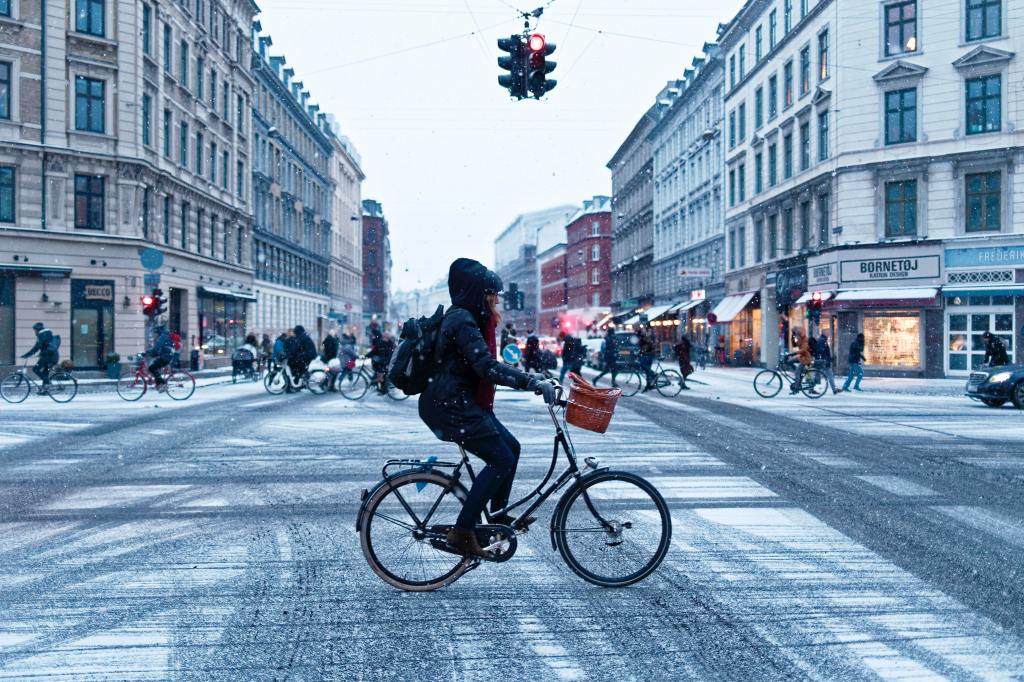
I’ve been caught out by gloves. Cycling has been OK, the rain is not too bad, the waterproofs work better than I expected. Yesterday the temperature dropped quite significantly, there were snowflakes in the rain. I didn’t quite realise how much it would affect my hands. I found a good solution though; wear two pairs of gloves. Luckily I had my thinner pair of gloves in my bag. The ones for use when I’m off the bike. I managed to squeeze my cycling gloves on over the top and it was all OK.
Cycling in the rain isn’t the most pleasant thing to do, but then neither is walking down the road and waiting for the bus, getting your umbrella turned inside out by the wind, whilst juggling a bag and an oyster card. All in all I think I prefer the bike. I have calculated that I am actually getting to work quicker. And apart from the hands, the rest of my body warms up quickly as soon as I start peddling. The waterproof outfit is not flattering, but no ones looking. I feel better in just a week. It feels like I’m getting a bit more fresh(ish) air and exercise, something that is really easy to miss in the winter.
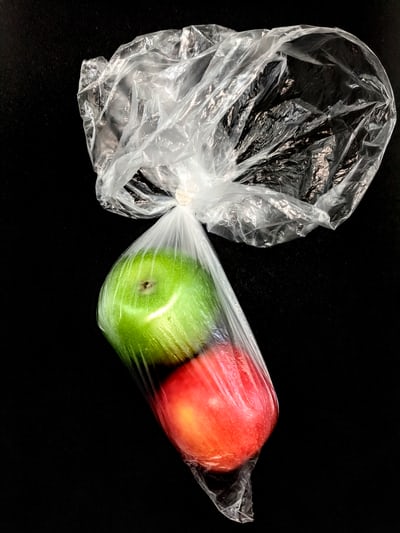
I have to be away from home for a night, so I pack a water bottle, and put a few pieces of fruit in my bag so that I can avoid the plastic packaging of snacks and drinks. I am staying in the Holiday Inn Express. The low budget chain has initiated a number of changes to the hotel experience, I am sure that cost control is the primary motive, but if they also reduce plastic waste, then I’m OK with that. There is only a shower, no bath, there is also a dispenser in the shower containing shampoo and shower gel, I’m disappointed for a moment, it means I can’t have that little pleasure of taking the little bottles away with me when I leave, but that is a small price to pay. The bathroom also has plastic glasses, that are in plastic bags, presumably to show that they are hygienic, and not used. So Holiday Inn you lose all the brownie points you won with the soap dispensers.
As I look around the room, I notice the bins, more specifically the bin liners, I’ve never thought too much about bin liners before. The bin in my room has one tea bag in it at the end of my stay. That plastic bin liner will be collected by the cleaner, put into another bigger plastic bin liner, then sent off to landfill. Surely there must be a better way of dealing with the rubbish? The Tea bag came in a paper wrapper, and I put that in my bag instead of the bin, for later deposit into a recycling bin.
This was an eye opener, I use bin liners, I am questioning why, and if I can deal with my rubbish at home without using them, or is this a step too far. Surely there was a time before they were invented, what did people do? I realise the plastic problem goes beyond the shopping bag, and its going to be really hard for me to reduce a lot of the other plastic that is embedded into society, the vegetables and bread that come bagged, the plastic wrapped magazine in the Sunday newspaper and all the rest.
Even if I recycle all the plastic bags that come into my home, there is still everything else that I have no control over. It starts to feel overwhelming.
I am travelling North on a train, watching the waterlogged fields pass by the window. I have made this journey countless times, and I have never seen the landscape look like this. It’s as if the whole country is trying to be a new lake district.
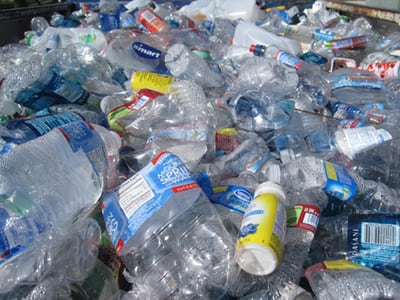
Sometimes it feels difficult to make the link between what I do every day, and the freaky weather that brings floods and heartbreak to so many people. Plastics are the evil poster child in relation to climate change. We know that plastics get into the oceans, kill fish, other sea creatures and birds and are ugly when the wash up on beaches. I’m not certain of their contribution to carbon, but as a by-product of the petro chemical industry, they must have something to do with it. Surely its pretty easy to stop using plastic bags. After all, the government and large stores are incentivising us by charging 5p every time we forget to take our own bag with us. Why is it that since the introduction of the 5p charge, we are apparently all using more plastic bags not less? I think it will be pretty easy for me to go a week without using a plastic bag for my shopping, and so I want to try and take it a bit further, and avoid all plastic packaging. I’m interested to notice what choices I am forced to make by the packaging industry.
I started with my journey to work. I have a bicycle, but am guilty of only using it when the sun is shining, and in daylight. I use the bus but on really rainy days I have even been known to persuade my partner to take me to work in the car, when I just can’t face the miserable walk to the bus stop. Its not far, just a 10 minute walk, and the bus journey is quick and takes me almost to the office door. The walk to the bus stop involves negotiating my way around the wheely bins that are waiting out on the pavement to be collected. The collection rota is complicated, there are at least 3 bins per house, and the front yards are small so people often just leave all their different colour coded bins out on the pavement all the time. The paving stones are cracked and broken in many places, some of them pushed up by the roots of the mature trees that line the pavements. I like the trees, but not the little bags of dog poo that appear around their base. The streets are further narrowed and obscured by a forest of metal poles some with various official notices attached to them, and some just naked, presumably waiting for new notices with new parking restrictions to be posted there and catch some unsuspecting motorist unaware. The walk feels like an assault course. I am trying to convince myself that using my bike, even in the rain and the dark will at least mean I don’t have to deal with that walk.
First I have to make sure I am safe, I need to make sure my bike is in full working order, particularly my brakes, and I will need some lights, and some waterproof clothing, and maybe some more equipment I haven’t even thought about.
I am pleased to see that bike lighting technology seems to have been through a revolution. There are loads of really stylish rechargeable models available and the brightness is dazzling. It’s a long way from the bulky dim battery powered lights that are languishing at the back of a draw in my house. Some of the prices are dazzling too but having to buy and dispose of alkaline AA batteries is something I want to avoid. I ask about dynamo lights. I can remember the bike I had as a kid had a dynamo set, I can remember the noise the little wheel made as it rubbed against the wheel, and the dim light it produced. Also how the lights stopped working as soon as the bike stopped moving. Since I have a number of traffic lights to negotiate I think this is not an option. I am told they are much better now, they have a sort of back up which means they say lit for a few minutes if you are stationary, there are some which operate from the wheel hub not the tyres, and even some that work off little magnets that attach to your spokes, but these only give a flashing light.
I look at them all, and decide that for now, I will go with the rechargeable ones. The light seems brighter, and the cost is also a factor. Investing in a dynamo system is probably something to think about if I decide I can use my bike more often. I get a decent set of rechargeable lights for £35 which are in the sale.
The waterproofs are the next problem. I look at the jackets and try on a few. I come over all Victoria Pendleton, and feel immediately like a professional cyclist; however my bike journey is only just a little over 3 miles, so it feels inappropriate. I will be cycling for about 15 minutes not a couple of hours. They are also fitted to be worn over proper cycling gear; I will be wearing them over my work clothes, including a jacket. Wearing cycling gear and carrying clothes in a pannier is not something I can contemplate. I am sure that my clothes would get all creased up, and I will be in dread of forgetting something. In the summer when I get into cycling most days, I leave a few pairs of shoes in the locker kindly provided by my employer, so that I wear my trainers whilst cycling, and then change into more appropriate office attire when I get there. Cycling days mean a restriction in the range of clothes I can wear that day, that’s all. I’ve learned which skirts and dresses are too tight or too short or billow out too much, and which trousers are too baggy and need clips to save them from the chain. I know I can handle that.
Some of the prices are also a bit steep for me. I know I will be saving money on transport, but do I really need to spend £150 or even more on a jacket. Luckily the sale rail comes to my rescue. I get a jacket for £30 which is roomy enough to go on over my normal work clothes and folds up really small. SO that’s the top half sorted, I have the same dilemma with trousers. I just need something I can pull on over my clothes. There really doesn’t seem to be anything suitable in the bike shop, so I try the outdoor shop. I get a pair of over-trousers, intended for people hiking, but I figure that they will do. Again they fold up small, and they have zips up the legs so you can pull them on over your shoes. I think they are a bargain at £25. So I’ve spent £90 on gear, and £65 on a bike service. SO once I’ve used the bike 104 times all my investment will be returned to me in saved bus fares.
I am now wondering what sort of impact this will have on my personal carbon footprint. The manufacture and transport of all these things I’ve bought have contributed carbon to the atmosphere, and even though I will save a few car journeys, mostly I am replacing journeys on public transport. The bus will still run every day, even if very slightly less crowded.
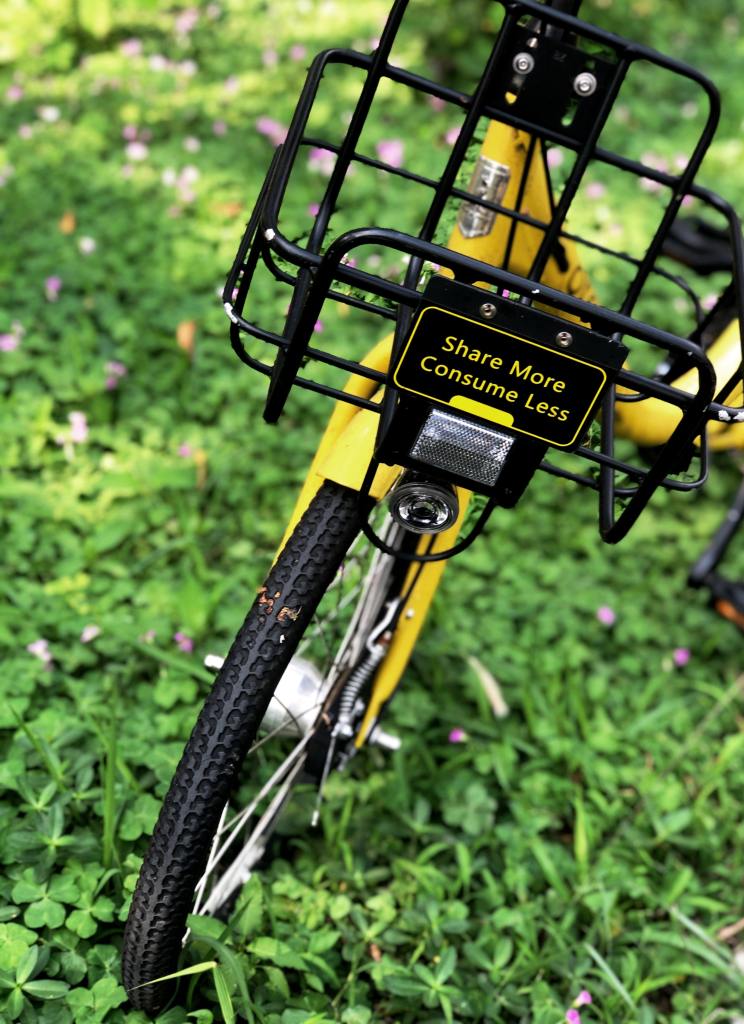
I have to use my bike for more things, replace more car journeys, use it for small shopping trips and any other short journeys where I find myself automatically going for the car keys. I’ll let you know how I get on.
It is the greatest of all mistakes to do nothing because you can only do little
— Sydney Smith
I live and work in London with my partner in an ordinary terrace house in an ordinary street. I recycle my rubbish, and take my own bags to the shops. On the whole I feel pretty virtuous; but is it enough? Some people have told me that as an individual I can have little impact on the amount of carbon that is being released into the atmosphere, that it’s down to big business and governments to make the changes. Well yes, they are right I suppose, but it doesn’t sit well with me. I have a belief that if enough people made just one small change, then added together it could add up to a big impact. But can I do it. I admit that the things I do, are either easy for me to do, or I’m nudged into doing by the powers that be, whether that’s the shops not giving me a bag, or the council not collecting my bins. What is it really like to do more than that? Can I really give up meat for ever, or is cutting down the only realistic option for me. And if I make changes and live in a more eco conscious way, will life become too miserable, or will I find new and unexpected new joys.
This is my chronicle of the attempts I make, and what its like. I welcome suggestions for things to try. I also want to ask questions. I am not an expert, and I see and read conflicting information. What is the truth, about my individual actions and their impact on the planet?

 A middle aged woman's attempts at a low carbon life