Categories
low carbon living;

A New Life

In the midst of a gloomy English autumn and winter its not unusual to  dream of escaping to a place with better weather.  The change in my mood when I can see a blue sky, rather than a steely grey monotone is remarkable.   For many years, that is all it was, an idle dream.   We  watched the TV programmes and discussed the places that people were looking at and the properties they viewed.   Would we go for France or Italy or Spain or further afield?  What type of place would we go for?  An apartment near a golf course or with a sea view or a larger place somewhere in the countryside.     These glimpses into the lives of people buying an apartment by the sea, or a French country chateau started to shift my perception.  The people were from all walks of life,  perhaps we too  could make our dream a reality.   If they could do it, then so could I.

Armed with a dream and not much else, we began to idly talk about the possibility of getting our own place in the sun.   We talked  about places we have been to on holiday, and if we would want to  live there for longer periods of time.   We start to look in estate agents windows whenever we travel, being either delighted or disappointed at the prices.   Everywhere looks lovely in the sunshine.   Sitting outside a café overlooking a harbour or a beautiful square feels like an  attractive life, but is it sustainable beyond one or two weeks?

If we are really going to get serious about this we have to turn this conversation, pleasant though it is, into a real plan.   Firstly we need to narrow down the list of possibilities, decide what we want our lives to look and feel like day to day, and build up that picture.   Then at least we can match the place against the dream, and then maybe we can start to do something about it.   Those TV programmes have taught me that if you are clear about what you want its easier to make a decision.

One day sitting in a pavement café in Malaga in March, having escaped a cold rainy London for a few days, the conversation starts again.  Malaga is one of my favourite places to go to for a short break, its basically a city with a beach; small enough to walk around, big enough to have plenty to do, and you can sit outside without a coat in March.    Could this be the place?   But he says it’s a bit busy, he wants to be somewhere quieter.   Its clear that we have to talk more about what we both want.   This time we get out a notebook and start making lists.   

It becomes clear that we want a lot of the same things, but there are also quite a few differences.  I have lived in cities all my life, and so find it difficult to image not living in one, or at least a large town.  He has also lived in cities all his life but wants an escape from that.    We agree on a lot though,  we want to escape the UK winter weather, have time to relax and enjoy simple pleasures, we want to have beautiful views to look at and have a sense of expansive space.   We want it to be easy to travel to, attractive for visitors so that our friends and family will want to come and visit us, and we want to be there for extended periods of time, months rather than weeks.    We do agree that the first priority is the weather in the winter, and the travel time.   That narrows the geography down a bit, it’s probably going to be Southern Europe. Its time to get down to some serious research.

Categories
low carbon living;

is this the beginning?

I am noticing my views on life are shifting. Not travelling to and from the office 5 days a week is allowing me to discover my neighbourhood.  I’ve spoken to more neighbours, usually on the Thursday ritual of showing our appreciation for key workers; than I have ever done before.  Using my bicycle for leisure and exercise rather than commuting is also changing my view of London.  

The roads are starting to get busier with cars, but for a few weeks, I had a glimpse of what a city could look like without them.

Traffic never disappeared completely, there was still some cars around and buses were continuing to run their routes; but the spectacle of many roads completely car free felt as special as coming across  a beautiful, magnificent vista after a long uphill walk to its vantage point.  

The sound of birds returned to the parks and streets previously dominated by the roar of traffic.  The previously ubiquitous noise was now almost shocking in its absence.

 As I cycled I could feel my pace slowing down, no longer felling it necessary to keep up with the flow of the cars.   My attention changed, from looking out for my own safety to looking out for the safety of the pedestrians, who were also relishing the freedom to step off the pavement. The tarmac had been reclaimed by people, the barrier between pavement and road blurred by the absence of speeding traffic, and the desire to spread out a bit.   Pedestrians and cyclists seemed to navigate around each other quite easily, now that the cyclists could free themselves from riding in the gutter. The space felt glorious.  It was strange to feel that I was now the most dangerous thing on the road.

Swapping two wheels for two feet, London had never looked so beautiful.  The ability to stop and look at buildings instead of focusing on dodging through a crowd, eyes constantly scanning for the gap, always in a rush to get from A to B felt strange at first.   The museums and galleries may be closed but the streets and buildings were showing me their history in a different way.   Looking up beyond the shuttered modern shop fronts I saw glimpses of the London that Dickens knew in the narrow houses and mullioned windows.  The upstairs downstairs lives lived in the homes on the grand garden squares, now taken over by company headquarters and hotels.  The shadows of the painted wall signs left over from the butchers, bakers and tobacco shops that preceded the global brands. 

The homeless had disappeared from doorways into vacant hotel rooms, those few weeks now feel like a slight bright star in an otherwise dark and scary time.

Queues of traffic are returning and yesterday I saw a man in the doorway of a bank huddled down even though the day was warm, and holding out a paper cup.

We are now all being encouraged to cycle and walk and to stay off public transport.   I switched to cycling for my commute some time ago, and can understand that this will feel impossible to many. The increase in cars on the road may make it more frightening and difficult for those that do give it a try.    If enough people brave it, then it could be the start of a new phase, and maybe pedestrians and cyclists don’t have to lose the territory the virus helped them to reclaim

Categories
covid 19

Risk? Living in lockdown

I had made a promise to myself that this was to be a time to do all those things that I never seemed to get the time to do.  I was going to sort out that drawer, you know the one, where things just get put, like the remote controls for things you no longer own, odd bits of plastic or metal that are left over when you make up a bit of flat pack furniture, empty jewellery boxes and old broken pairs of spectacles.  I was going to do that one and many others too.  I was going to be living in splendid minimalism, only having things around me that bought me joy.

Before the lockdown I had been doing those sorting out jobs, slowly.  I used the excuse of going out to work to explain why progress was slow, but now there’s no progress at all. 

There was a plan attached to the task before; we were going to sell up and move to somewhere smaller.  Our current home is bigger than we need, and basically we didn’t want the hassle anymore. Now the future feels so uncertain, making any plan for the future feels a bit ridiculous, so what really is the point in sorting out that drawer.

I used to believe that tomorrow would be pretty similar to today, next month and next year had a predictable feel to them. But really was that true?   There has been a lot of talk about the risks that are being taken with this gradual release of lockdown, and the risks of staying locked down.   We are all looking for answers, someone to tell us the way through these choppy waters.  The truth there are no answers, or more accurately there are many answers, but no one knows which one will work out best. No one really knows what the future will look like, and they never did.

We have always lived with risks, some people are more comfortable with it than others, but we have been really good at recognising and managing them.  We used to drive cars and motorbikes without seatbelts or crash helmets, as the vehicles got faster, and the roads more crowded we managed the risk of people dying in accidents by changing laws and designing safer vehicles.  People still die in accidents, and we still get into cars and drive; sometimes too fast for the conditions. 

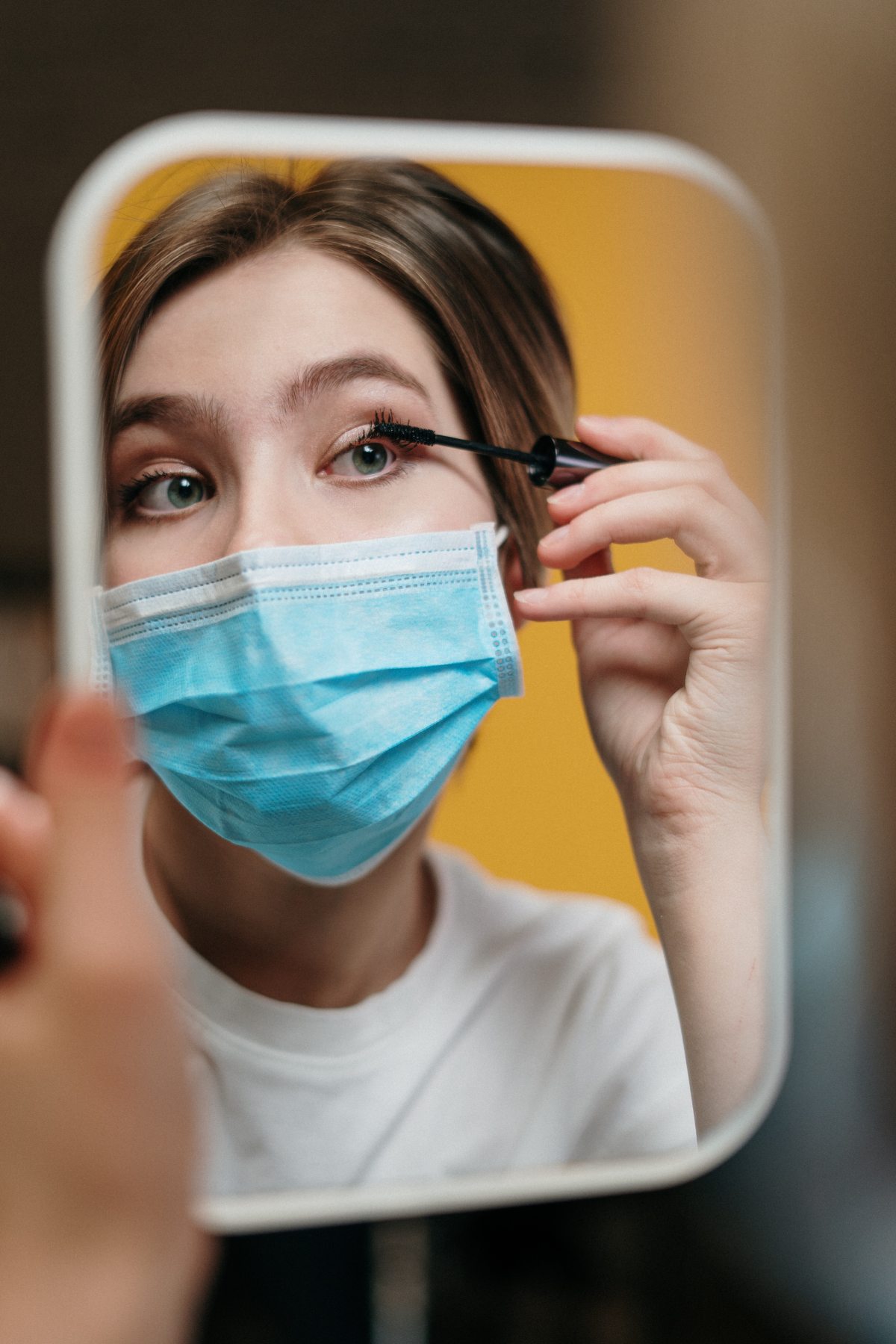
Those old risks are so familiar we hardly even think about them.   It seems we are going to have to learn to live with the risks this new virus poses.  We will need to adapt and adjust, but we will get used to it.     Maybe facemasks will be part of the answer, and we will be buying one in every colour to match our outfit.     Articles will be written on which masks suit your face shape and haircut, and Primark will be copying the catwaik versions overnight.

In the meantime I’m going to get on and sort out that drawer, and tomorrow I’ll do the next one.  Making plans for the future feels like the best thing to do right now.

Categories
low carbon living;

Life in lockdown

There wasn’t a VE day party on my street yesterday, but many other streets had really got into the spirit. On my daily walk to the park I passed streets decorated with flags and bunting, music spilling out from open windows, families and neighbours chatting and drinking together, the sunshine helping the good feelings along. It looked like some of the rules of social distancing were being bent if not completely broken, and there was not a face mask in sight, which surprised me. Since lockdown began I have been astounded at how compliant people have been with the restrictions imposed on our freedom. There have been some small rebellions, but mostly people have stayed home. It also seems that wearing some sort of face covering has become a must have accessory quicker than any designer handbag, but I guess it’s a bit difficult with a glass of rosé.
Is everyone anticipating the relaxation of some of the restrictions, and just starting a bit early? The signals have been leaking out over the past few days. I can imagine Boris working on his speech, trying to emulate his hero Churchill. Being surrounded by the VE day anniversary in the street and on the tv makes the comparisons even more vivid.
We hear the language of war every day. It would seem that all we need to win this particular battle is good old British pluck, a bit of pulling together, our fighting spirit and tenacity. There is little talk of strategies or plans, nor how resources are being organised and allocated. That’s all a bit tedious and boring, not very British, that isn’t how we won the war!. We prefer stirring speeches and armies of ordinary people tearing up their old sheets to make PPE.

In Germany it seems that their approach also conforms to national stereotypes. They appear organised and strategic. Having a good plan and sticking to it does not make for a great dramatic twist when success is grasped from the jaws of failure, but I’m betting on Angela not Boris emerging as the staring role in this movie.

Perhaps this time victory will not take six years, perhaps this really will be all over by Christmas.

Categories
covid 19

The D word

Death is becoming more visible, the word that was once hidden through metaphor and hushed tones is now the main item on the daily news.   I feel quite lucky that the daily death toll is still an abstract concept for me.   No one I know has yet been touched by the virus except for the restrictions on daily life that are affecting us all.  Some of my friends have had some sort of illness which may or may not have been the virus, but no one I know has yet been hospitalised.   For this I am grateful.

I had a small taste of what others whose loved ones are currently sick with it must be going through when my 86 year old uncle didn’t respond to my texts last week.  He was fine, he had simply run out of credit for his phone, and unusually for a man of his age, he doesn’t have a landline.   We are laughing about it now of course.  Its story about our tough as old boots, won’t take any help from anyone, fiercely independent, Uncle Terry.  I don’t want to change my view of him from that person to someone who is frail and vulnerable, and I’m glad that I don’t have to.

My view of human nature is changing though.  Every day there is another story of human kindness that makes me well up.  From people in the caring professions, the armies of volunteers that are helping out in their own neighbourhoods and beyond, but also the companies that are putting people before profit, at least temporarily.  There are now hotels that who are welcoming the homeless in and across their marble foyers, rather than chasing them away from the pavements around their doors.  The Michelin starred restaurant chefs who are now producing meals in containers for vulnerable people rather than intricate and beautifully presented dishes involving reductions, jus and heritage vegetables for diners with more money than appetite, served with a flourish by a waiter.   How many of those waiters and others who served our coffee in the morning our sandwich at lunchtime are now in need?

One of the small joys of this pandemic is seeing society wake up to what is important; people, our health, our relationships.   Is it a coincidence that the people who are the most important, the ones who we truly rely on to keep our lives and our society going all appear to be at the bottom of the earnings ladder.   Will this experience lead to a wider change?   I don’t suppose it will.   Whilst I sometimes believe in some sort of   universal justice, the opportunity to turn that particular injustice around is down to us.     Society has a short memory.    When we have eventually found a way to live with the virus without the daily death toll,  I don’t suppose we will remember that no one ever stood at their door, or  leaned out of their window every Thursday at 8pm to applaud and make noise for the bankers, the corporate bosses or the hedge fund managers.   

Categories
covid 19

Now you can all go to your rooms

Is this the planet fighting back?   In my mind I have an image of mother earth losing its rag.   Like a parent who has reached the end of their patience with their kids playing up, fighting or bickering.   When the tone of voice changes from a calm even toned request, to something far more scary.  That tone where the kids know they have gone too far now, and the naughty step or facing the wall or banishment to their room is probably going to follow.   Mother earth had sent us warning signs, freaky weather, melting glaciers, strange diseases that had hopped from animals to humans, but had happened a bit too far away.   We just carried on regardless, kept on polluting and destroying habitats, with our thirst for travel, for more stuff, bigger cars, and more food than we can possibly eat.   We didn’t heed the signs;  so she got angry and sent us something to make us stop.    

In a few short weeks, which have simultaneously felt like forever and a single day, the air is cleaner, Images of Los Angeles and The Himalayas have appeared, both now looking  majestic free from the pollution fuelled fog that usually shrouds them.  The taste and smell of the air in my local area has changed, cycling and walking around the streets is a joy, with few if any cars to avoid, and those that are around, seem to be driven with more patience and awareness.     No one is impatient stuck in a line of traffic these days.    I sense the irony of those that suffer with asthma being both more vulnerable to the virus, but having easing symptoms from the lower pollution levels.

Saying thank you seems to be entering into daily life a lot more.    Beyond the Thursday night clap, I hear a thank you being said by everyone who leaves as I wait outside the corner shop, one in one out.   Queuing is in our nature, but these new two metre gap queues are full of conversation, not like before when everyone would be impatiently tutting, eyes firmly focussed on the front, willing the people ahead of them to hurry up.

I feel closer to nature even though I am denied my excursions out of the city.  On my daily walk to the local park, I find myself stopping to admire the spring flowers that are emerging in the front gardens that have not been sacrificed to the god of off street parking.  I stop and watch as a colourful array of tulips bob their heads in the slight breeze and spring sunshine, hoping that the door will open and I can say thank you to the person who planted them, and maybe even chat a while, from a safe distance of course.

I notice the stark lines and structure of the tree branches still distinct, but softened with pink and white blossom and a tinge of green as the leaves start to bud;  showing me their secrets before the mass of leaves fill in the gaps, hiding them from casual view until next year.   Why have I never seen this before?  Too busy I suppose, head down, trying to avoid eye contact, now I crave it, just a nod from a neighbour that I’ve never seen before, that nod that says we are all in this together.

Categories
low carbon living;

Planting trees

Thanks to Saranda Grey who has alerted me to the search site Ecosia. They plant trees if you use their search. Just use that instead of google.

Categories
low carbon living;

The Market

I felt a bit strange at the market.  The veg was all on display in little plastic bowls some of it obviously past its best, but some of it great.  The ban on the thin plastic bags hasn’t hit market traders.  They are still handing them out by the bucket load.  The transactions were well practised, with the customers either pointing to or saying what they wanted, the stallholder mechanically pouring the contents of the bowl into a plastic bag, and being ready with the next one immediately.  The pricing at £1 a bowl meant that queues moved quite quickly.  

I took my own supermarket bags for life, much to the bemusement of the stallholders.    I could feel the strange looks as I handed over my bags to be filled. One stallholder saying, don’t worry we don’t charge for bags.  And I responded with, its not the money, it’s the planet I’m worried about.  A few grins were exchanged, but mostly it felt like I was slowing down the well practised routine.    The shopping trolley was de rigour in this street market.  I could see why. The prices encouraged buying, and food is heavy.

The sights sounds and smells transported me to my childhood, where I had spent many a Saturday being dragged around the local indoor market by my parents, until a Tesco opened up and they shifted their allegiance, seemingly preferring food to be prepacked into uniform portions and quantities, instead of specifying the number of apples or slices of ham that they wanted. 

This was a street market not a fancy farmers market.   There were stalls that sold everything from clothes, toys, jewellery, copycat perfume, fabrics, ribbons as well as fruit and veg, and one or two fish stalls, the ice from their cold packs slowly melting and dripping into the gutter.    There was plenty of bellowing about the goods on offer, mainly from the veg stalls. Those selling pots and pans or towels didn’t seem to feel the need.   I was surprised how good it felt to talk to people as I did my shopping rather than anonymously filling a wheeled, wire trolley and taking it to the auto check out, even being called “darling” didn’t make me scowl.

I decided that the length of the queue at the stall was the best indicator of the quality of the goods on offer, after all with all this choice; there must be something to make it worth the wait.   

I wanted to buy loads more.  But remembering that I was restricted to what I could carry on my bike.   I had to prioritise. I I could carry enough fruit and veg to last us the week, but I did have to make some tough choices.  The thought of the big bowl of blueberries that I had to not buy still lingers.    The shopping trip took a bit longer, but not that much.  I had no hard plastic containers to dispose of, and I spent a lot less than I would have done at the supermarket.  I reckon I saved about one third in terms of cost.  I thought that was well worth the extra time it took.

The moment of truth came with the cooking and the eating.   The fruit was ripe, not rock hard and tasted fantastic.  It might not last much beyond a few days, but it tastes so nice I don’t think it will be sitting in the fruit bowl for very long.    The veg seemed better for not being bagged up and chilled to within an inch of its life.

This is an easy switch for me to make.  I actually enjoyed this shopping trip, in stark contrast to the supermarket where passing over the threshold turns me into some sort of zombie, and I want to run out screaming within about 10 minutes.  I’ve saved petrol and packaging.   I also feel better for spending my cash with the stall holders than with the supermarkets.  

Categories
low carbon living;

Shopping and Cycling

I am inspired by a TV programme I caught by accident whilst channel surfing.   It showed a young couple and their child who were living on a boat in Greece.  The woman had to swim one mile to the shore to go to the supermarket after her husband had failed to catch some fish.  She had a waterproof bag that she towed along with her as she swam.  Now that looked really inconvenient.   If she could do that, then I can surely make a cycle trip to a supermarket. 

Our usual habit of just getting a trolley and filling it would no longer be an option.  Now we would have to plan the meals we want to eat and buy only what we need.   I was nervous about this; it felt like a loss of freedom, Just writing that down makes me feel a bit pathetic.  Many people in the world really don’t have any freedoms, and I am getting anxious about having to stick to a meal plan for a couple of days.  My main worry is how he is going to react.    Women are most often painted as fickle, but in my little household it’s him who is the one who changes his mind. He takes the art of keeping all options open to a new level.   So far, my lifestyle changing endeavours have had no direct impact on him, he says he’s supportive of my efforts, but I wonder if committing to a particular meal two days ahead of time, and having no plan B might be a step too far, especially since he does most of the actual cooking.    

I decide to approach this with a bit of creativity, perhaps we can still have the “what do you fancy for dinner conversation” but it will be limited to “what do you fancy for dinner that uses three particular ingredients, none of which have been wrapped in plastic.”  I have to try and make this an attractive proposition to him, so I make an appeal to his inner geek.    After I have explained the challenge, and bribed him with the promise that it means he doesn’t have to drive me to the supermarket, and so can spend the time watching the rugby or anything else he wants to do, he gets really into it.   All the cookery books get brought out, and he starts cross referencing ingredients to give us the most options.   About an hour later he presents me with a matrix of recipes and ingredients.  I resist the temptation to say anything about his ideas, keeping my powder dry for the “why can’t we eat meat” moment.

I feel quite intrepid as I cycle to the supermarket.  It’s not far, and I can take a shortcut down the canal towpath, making for a much more pleasant journey than the usual battle through the traffic in the car.   I have panniers and a back pack, my shopping list and I am confident that all will be well.  

Then it hits me. It’s the packaging.  All the vegetables that are on my list are either pre packed in a plastic bag, or individually wrapped in plastic film.    I am rooted to the spot next to the potatoes filled with indecision.   The number of “sorry’s “and “excuse me’s” build up as people are forced to manoeuvre their trolleys round me, and I scuttle away into the in store café.  I nurse my coffee (china mug not take away cup) and study the list again, trying to think of alternatives that don’t involve going to the butchers counter.  Which is worse, plastic covered vegetables, or non plastic covered but high carbon produced meat?   All these new dilemmas to navigate make my head spin.

I realise that shopping in a supermarket is going to be a thing of the past for me. I leave and get back on my bike.  It’s down to the market for me.

Categories
low carbon living;

Cycling # 3 shopping

Its amazing the amount of shopping you can carry in a couple of panniers. The benefit is that you don’t have to carry the bags in your hands.

Design a site like this with WordPress.com
Get started